

On this page
A second SaaS product makes sense when it serves a need you understand and the business can operate it well. Access to another codebase can make the technical starting point easier, but it does not create customer demand or support capacity.
The strongest opportunity often appears next to work your existing users already do. A training audience may need help finding relevant jobs. A community directory may lead people toward events. A business receiving requests may need a better way to manage the resulting tasks.
Separate an adjacent need from a new distraction
Write down the user, the problem and how you learned about it. A request from several existing customers is different from an idea that sounds compatible with your brand.
Then ask whether the problem requires a separate product. It may be a missing feature in the first application, a helpful integration or a referral to another service. A new login and subscription can add friction even when the offer is relevant.
The complementary-product guide distinguishes alternatives, adjacent offers, internal tools and combined workflows. Use that distinction before choosing the software.

Inspect the details that determine the result. Editorial oil illustration.
Inspect what you can reuse
An existing audience, subject knowledge and distribution channel can help you learn about a second offer. Reuse is less certain in support, billing and operations.
Two products may have different user roles, service accounts, deployment requirements and recovery procedures. A founder who can maintain the first product is not automatically prepared to maintain both during an incident.
If you are considering a purchased starting product, inspect its demo and delivery requirements. The SaaSCode catalog is a place to identify built candidates; the individual product’s documented scope is what matters for the decision.
Estimate incremental work, not only acquisition cost
| Area | Question before adding the product |
|---|---|
| Customer need | What evidence suggests the audience wants this next step? |
| Setup | Which accounts, domains and services are additional? |
| Support | Who answers questions specific to the second workflow? |
| Maintenance | Which updates and recovery procedures are separate? |
| Distribution | Where will a useful contextual recommendation appear? |
| Focus | What work on the first product would be delayed? |
Use the SaaS launch-cost guide to build an operating estimate. Include your time and the cost of interruptions. Avoid treating a second product as passive income simply because its initial source code is already built.
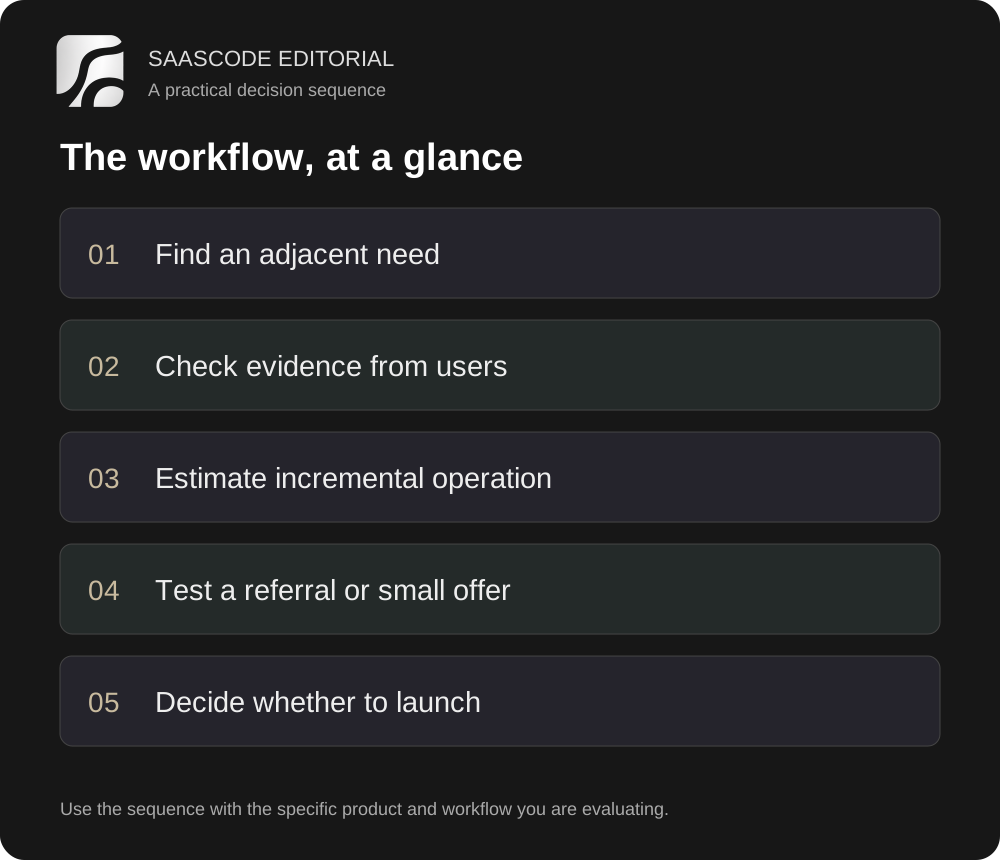
Test a lighter relationship first
A relevant referral can tell you whether users want to explore an adjacent offer. A manual concierge workflow can reveal which information needs to move between products. An internal trial can expose operating friction.
For a learning-and-employment hypothesis, for example, investigate Coursio and Vacanta as separate products before designing a combined business. A link between relevant resources is a smaller experiment than shared accounts, billing and candidate data.
Make the recommendation useful in its own right. Google’s guidance on links favors links with clear context and descriptive anchors. A collection of thin pages linking to each other is not a substitute for a useful customer journey.
Set a stopping rule
Define what you need to learn before investing more. That might be a repeated request from a particular audience, successful completion of a trial workflow or evidence that someone can own its support.
Also define what would make you stop. If the second product requires a different audience, a new distribution channel and unfamiliar operations, the apparent adjacency may be weak. It can still be a valid business, but evaluate it as a larger commitment.
No universal customer count or revenue threshold can make this decision for every founder. The relevant evidence depends on the business and the cost of being wrong.

Follow the work through to an observable outcome. Editorial oil illustration.
Keep the first product healthy
A portfolio becomes fragile when the first product funds or supports work it can no longer sustain. Protect the workflows customers already rely on. Make responsibility explicit before adding another release schedule.
If the opportunity mostly serves your own team, start with internal use. If customers repeatedly need a handoff, investigate one focused connection. If the change belongs inside the first application, consider a niche customization.
The decision is strongest when you can explain why the same audience needs the next offer and how the business will keep both working. A second product should extend a useful relationship, not merely increase the number of applications you own.
Editorial collaborations
Something useful to add?
Bring a documented case, an expert perspective or a better source to the SaaSCode blog.
Editorial collaborations